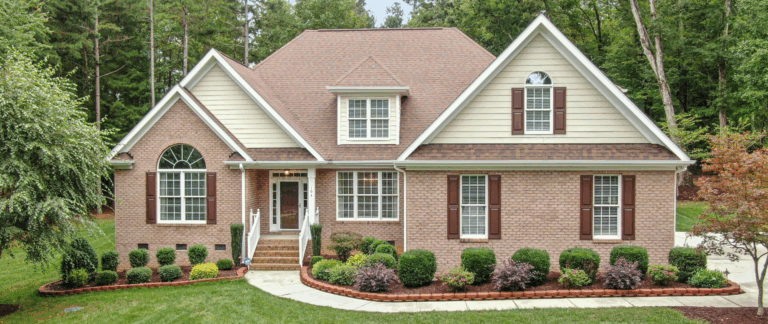
Colorado remains one of the most active states for real estate investors because demand comes from multiple directions at once. Denver and the Front Range continue to attract long-term renters through tech, healthcare, and corporate growth, while mountain markets generate some of the strongest vacation rental revenue in the country. Investors are using DSCR loans to move faster in both environments by qualifying through property income instead of personal tax returns.
Whether the strategy is long-term rentals, short-term vacation properties, or portfolio growth across multiple markets, DSCR financing gives Colorado investors more flexibility than conventional loans. Loankea works with investors across the state to structure financing around the property’s cash flow and long-term investment goals.
What a Colorado DSCR Loan Is and How It Works
A DSCR loan qualifies the property on its rental income, not the borrower’s tax returns. No W-2s, no pay stubs, no employment verification. For Colorado investors who hold property in LLCs, run their own businesses, or simply want a faster path to scale a portfolio, this loan program solves many of the limitations conventional financing creates. At Loankea, our DSCR program serves Front Range portfolio builders, Boulder student-rental owners, and resort-town Airbnb operators who need more flexible qualification, financing options, and entity structure.
The Debt Service Coverage Ratio compares the property’s rent against its full monthly payment.
DSCR = Gross Monthly Rent ÷ Monthly PITIA
PITIA covers principal, interest, property taxes, insurance, and HOA dues if applicable. A 1.0 ratio means rent exactly covers the payment. A 1.25 ratio means rent runs 25% above the payment, which usually qualifies for the best loan terms. A ratio of 0.85 means rent covers 85% of the payment, which still qualifies for many programs at reduced leverage.
A simple Denver example shows the calculation in practice. A $475,000 single-family rental in Aurora with $2,800 in monthly rent and $2,400 PITIA produces a 1.17 DSCR. That places the property in a standard approval range with room to push toward better pricing if the borrower adds five points to the down payment or chooses an interest-only option.
How DSCR Levels Affect Loan Terms
Lenders price DSCR loans against bands. Each band carries different rate, leverage, and reserve requirements. Knowing which band you fall into matters more than chasing decimal-level rate differences.
| DSCR Band | Pricing Result | Typical Maximum LTV |
|---|---|---|
| 1.25 and above | Best rates, wider lender options | 80% |
| 1.00 to 1.24 | Standard approval with minor rate adjustments | 75% to 80% |
| 0.75 to 0.99 | Approved with reduced LTV or stronger reserves | 70% to 75% |
| Below 0.75 | Limited options, larger down payment required | 65% to 70% |
| No-ratio program | Available when fundamentals support the deal | 65% |
Loankea offers DSCR programs that accept ratios as low as zero on select loan programs. That gives investors a viable path on properties where projected rent does not yet cover full PITIA but the overall borrower profile remains strong.
Who Colorado DSCR Loans Work Best For
Colorado DSCR borrowers typically fall into one of four groups.
- The first is the Front Range portfolio investor scaling beyond the conventional ten-property limit. Loankea’s DSCR program has no cap on the number of financed properties, which removes the structural ceiling on portfolio growth.
- The second is the self-employed Coloradan whose tax returns understate true income through legitimate deductions. DSCR underwriting ignores personal returns entirely, so write-offs that hurt conventional approval do not affect loan qualification.
- The third is the BRRRR investor working through Pueblo, Aurora, or Colorado Springs. They acquire distressed property with bridge financing, stabilize it, and refinance into a long-term DSCR loan once the rent is documented.
- The fourth is the resort-market operator buying in Copper Mountain, Keystone, or Breckenridge’s Resort Zone where short-term rental licensing remains open and revenue per night supports strong DSCR ratios.
Colorado DSCR Loan Requirements
Most Colorado DSCR programs share the same core requirements with minor variations between lenders.
Credit
The floor sits at 640, with materially better pricing at 700 and best execution at 740 and above. Loankea accepts qualifying files starting at 620 with compensating factors, which gives borrowers near the bottom of the range a workable path.
Down Payment
Standard purchases run on 20 to 25 percent down. Strong borrower profiles with DSCR above 1.25 and credit above 700 can reach 80 percent LTV. Lower DSCR ratios or weaker credit typically reduce maximum LTV to 75%, sometimes 70% on cash-out refinances. Select Loankea programs allow 15% down on well-documented properties.
Reserves
Most programs require 3 to 12 months of PITIA in reserves after closing. Six months is the working baseline. Reserves can sit in checking, savings, brokerage, or partial retirement balances.
Loan Sizes
Standard programs range from $100,000 to $3 million. Jumbo platforms reach $10 million and above for high-value properties in Aspen, Vail, Cherry Hills Village, and similar markets.
Vesting
Investors close in their personal name, an LLC, an S corp, a C corp, or a revocable trust. Colorado investors routinely use Wyoming or Colorado LLCs for asset protection. All of these structures are accepted.
How Colorado Property Taxes Affect DSCR
This is one of the few times an out-of-state factor actually works in the investor’s favor. Colorado’s effective property tax rate averages 0.60% statewide in 2026, which sits in the lower third of US states. The 2026 residential assessment rate is 6.8% of actual value after a 10% reduction on the first $700,000. Each county then applies its own mill levy.
Lower taxes feed directly into a stronger DSCR. The same $475,000 property carrying $237 per month in property tax produces a meaningfully better ratio than an equivalent property in Texas or New Jersey carrying $700 to $900 per month.
The table below shows median effective property tax rates across the most active Colorado investor markets in 2026.
| County | Major Cities | Effective Tax Rate | Median Annual Tax (per $500K home) |
|---|---|---|---|
| Boulder | Boulder, Longmont | 0.55% | $2,750 |
| Jefferson | Lakewood, Golden | 0.51% | $2,550 |
| Pueblo | Pueblo | 0.51% | $2,550 |
| Weld | Greeley | 0.54% | $2,700 |
| Denver | Denver | 0.55% | $2,750 |
| Adams | Thornton, Brighton | 0.60% | $3,000 |
| Larimer | Fort Collins, Loveland | 0.55% | $2,750 |
| Douglas | Castle Rock, Highlands Ranch | 0.65% | $3,250 |
| Arapahoe | Aurora, Centennial | 0.62% | $3,100 |
| El Paso | Colorado Springs | 0.50% | $2,500 |
One footnote matters for 2026 underwriting. Colorado introduced two separate residential assessment rates starting with this tax year. School district taxes apply at 7.05% of actual value, while all other taxing districts apply at 6.25%. The combined effect raised most bills 10% to 15% compared to the prior year. Investors modeling new acquisitions need the post-2025 reassessment numbers, not the older estimate.
Short-Term Rental Rules Colorado Investors Should Know
Colorado does not regulate short-term rentals at the state level. Every city and county sets its own rules, and the rules tightened sharply in 2024 and 2025. Investors planning Airbnb income need to verify licensing eligibility before going under contract. Loankea accepts AirDNA documentation on STR transactions, which gives first-time short-term operators a viable qualification path even without trailing revenue history.
Denver
Denver permits short-term rentals only at primary residences. Investment properties cannot operate as STRs. Annual license costs $100. Combined city tax burden runs roughly 15.5% including the 4.81% sales tax and 10.75% lodger tax. Investors targeting Denver use long-term rental income for DSCR underwriting, not STR projections.
Boulder
Boulder limits STRs to primary residences with strict annual affidavit requirements. Investment-only STR operations are not permitted. Long-term rental DSCR is the standard path for investors here.
Colorado Springs
Colorado Springs operates a two-tier system with annual permit fees around $125 plus sales tax licensing. STRs are permitted in non-owner-occupied properties under specific zoning conditions. This makes Colorado Springs one of the more workable Front Range STR markets for pure investors.
Summit County and Surrounding Resort Areas
This is where the rules get specific. Each town inside Summit County runs its own framework.
- The Town of Breckenridge uses four zones. The Resort Zone and Zone 1 currently have licenses available. Zones 2 and 3 sit at cap with active waitlists, and the wait can stretch several years. The total cap across town reaches 2,200 licenses.
- The Town of Frisco caps STR licenses at 900, hit that cap, and operates a waitlist. The annual fee runs $250 with renewals due April 30.
- The Town of Dillon does not cap STR licenses but carries the highest combined tax rate in Summit County at 19.875%.
- The Town of Keystone, incorporated in 2024, has no cap and the lowest tax rate in the county at 8.375%.
- Copper Mountain sits in Summit County’s Resort Overlay Zone with no cap on licenses, no booking limits, and no waitlist. This makes it one of the most predictable STR investment markets in Colorado in 2026.
- Unincorporated Summit County divides into four basins with separate caps. As of January 2026, the Lower Blue Basin had 508 of 550 licenses issued, the Upper Blue Basin sat over its 590 cap at 563 active and growing, and the Snake River Basin sat over its 130 cap at 137 licenses. Waitlists are open. Licenses do not transfer to a new owner. Every sale resets the clock.
The practical takeaway is straightforward. Buyers chasing STR income in Summit County should verify current cap status and zone designation before writing an offer. A DSCR loan can finance the purchase, but the rental income projection collapses if the property cannot be licensed.
Three Ways to Improve a Borderline DSCR Application
Most applications that come in with a DSCR between 0.95 and 1.10 can move into stronger pricing with one structural change. Three adjustments usually make the biggest difference.
The first lever is the interest-only structure. A 40-year term with 10 years of interest-only payments removes principal amortization from PITIA. On a $500,000 loan at 7 percent, the fully amortizing payment runs $3,327 per month. The same loan at interest-only runs $2,917 per month. That $410 reduction often moves a 0.98 ratio above 1.10 without any change to the acquisition.
The second lever is the appraiser’s rent schedule. DSCR qualifying income comes from the appraiser’s Form 1007 market rent estimate, not the investor’s pro forma. Submitting current lease comparables, active rental listings, and management company rent rolls before the appraisal helps the appraiser produce a number that better reflects current market rent.
The third lever is the down payment. Adding five points of down payment on a higher-tax county property meaningfully reduces monthly PITIA. On a $450,000 Douglas County property, an extra $22,500 down can move the ratio from 1.05 to 1.18, which clears the threshold for the standard pricing tier.
Important Costs Many Colorado Investors Overlook
This is the part out-of-state investors most often overlook. Colorado has specific structural items that show up in PITIA, in property tax bills, and in resale value, and ignoring them at acquisition costs real money later.
Metropolitan Districts
Many newer Colorado subdivisions in Douglas County, Adams County, and parts of Weld County include Metropolitan District debt. These districts fund infrastructure and repay the debt through additional mill levies on top of the base property tax. Total mill rates in some Metro District subdivisions reach 90 to 130 mills, which translates to effective tax rates closer to 1.0% instead of the 0.60% county average. This shows up on the property tax bill, lands inside PITIA, and reduces DSCR. The disclosure document at acquisition lists the obligation. Review it carefully before closing.
Wildfire Insurance
Properties in foothill and mountain areas face genuine wildfire exposure. Standard Colorado homeowners insurance carriers have reduced coverage availability from high-risk zones since 2020. Properties in Boulder County foothills, parts of Larimer County, El Paso County canyon corridors, and most of the high country either pay premium rates or shift to surplus lines coverage. Annual premiums of $3,500 to $7,500 are common in high-risk zones, which adds $290 to $625 per month to PITIA. Get a bound insurance quote tied to the specific address before locking financing terms.
HOA and Resort Fees
Mountain condos commonly carry HOA dues of $500 to $1,200 per month, sometimes higher. These dues sit inside PITIA on the DSCR calculation. A $4,500 nightly STR unit in a building with $1,000 monthly HOA dues produces a very different DSCR outcome than the same unit with $400 dues. Pull the seller’s actual HOA statement before the appraisal.
Reassessment Timing
Colorado reassesses property every two years in odd-numbered years. The 2025 reassessment set values for tax years 2025 and 2026. The next reassessment takes effect in 2027. Investors closing in 2026 should expect a fresh valuation hitting the 2027 tax bill, and that valuation will reflect the actual sale price. Underwriting on the prior owner’s tax history can understate future monthly housing costs.
Loankea Colorado DSCR Program Highlights
Loankea’s DSCR loan programs are designed specifically for real estate investors who need adaptable financing options. We customize our options to match your investment goals and deliver clear solutions for your property financing needs.
| Program Highlights | Additional Benefits |
|
|
These features make Loankea a strong financing partner for real estate investors seeking efficient, flexible DSCR lending options with minimal documentation requirements and faster closing timelines. Explore our Colorado DSCR loan solutions and build your next investment opportunity with financing designed around long-term portfolio growth.