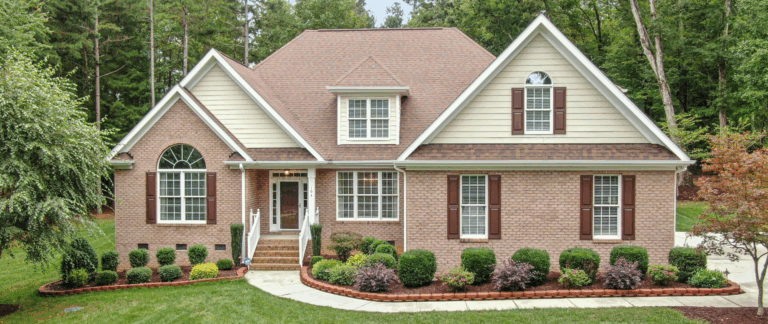
Georgia continues to attract real estate investors because demand stays strong across both long-term and short-term rental markets. Atlanta drives steady tenant demand through healthcare, logistics, film, and tech employment, while coastal and mountain markets like Savannah, Tybee Island, and Blue Ridge continue to perform well for vacation rentals. For investors looking to scale without conventional income documentation, DSCR loans offer a more flexible path built around property cash flow instead of personal tax returns.
Loankea provides DSCR financing across Georgia for long-term rentals, Airbnb properties, portfolio expansion, BRRRR projects, and cash-out refinances. Investors can qualify using rental income rather than W-2s, pay stubs, or traditional debt-to-income calculations.
How a DSCR Loan Works in Georgia
A DSCR loan is a non-QM mortgage built specifically for income-producing residential property. The lender does not pull tax returns, W-2s, 1099s, or pay stubs. Approval comes down to one calculation that measures whether the property pays for itself.
DSCR = Gross Monthly Rent ÷ Monthly PITIA
PITIA covers principal, interest, taxes, insurance, and HOA dues if any apply. A ratio of exactly 1.0 means the rent covers the mortgage payment. Anything above 1.0 produces monthly cash flow. Anything below means the property runs at a loss until you raise rent or pay down the balance.
How Rental Income Is Calculated for DSCR Loans
The income side of the ratio depends on how the property is operating today.
- For a tenanted long-term rental, we use the in-place lease.
- For a vacant unit, we use the appraiser’s Form 1007 market rent estimate.
- For a documented short-term rental in markets like Atlanta, Savannah, Tybee Island, or Blue Ridge, we accept 12 to 24 months of platform revenue from Airbnb or Vrbo, with AirDNA market reports as supporting data.
Lenders typically discount gross STR revenue by 20% to 25% before running the ratio, so a Tybee beach house generating $90,000 annually qualifies on roughly $70,000 for underwriting purposes.
Who Qualifies and What Documents You Need
DSCR loans require a fraction of the paperwork conventional mortgages demand. The full list breaks down into three buckets.
Borrower documents
- Government-issued photo ID or passport
- Two months of bank statements showing reserves and down payment
- Credit authorization signed at application
- Proof of liquid funds for closing
Property documents
- Purchase contract on a purchase, or current mortgage statement on a refinance
- Property-specific insurance binder or quote
- Existing lease if the property is occupied
- Trailing 12 to 24 months of Airbnb or Vrbo statements for STR properties, plus an AirDNA report
Entity documents if closing in an LLC, S corp, or trust
- Articles of organization or incorporation
- Operating agreement or bylaws
- EIN letter from the IRS
- Certificate of authority for out-of-state entities holding Georgia real estate
That covers it. No tax returns. No employer verification calls. No personal debt-to-income ratio test.
Georgia DSCR Loan Terms and Rates
Rates on Georgia DSCR loans currently start near 6.0% for the strongest borrower profiles and run up to roughly 7.5% for more complex scenarios. Pricing reflects credit score, coverage ratio, loan-to-value, and loan structure. Here is the program at a glance.
| Program Feature | Standard Tier | Premium Tier |
|---|---|---|
| Minimum credit score | 620 | 700 plus |
| Maximum LTV on purchase | 75% | 80% |
| Maximum LTV on cash-out refinance | 70% | 75% |
| DSCR floor | 0 (no-ratio program) | 1.25 plus |
| Reserves required | 6 months PITIA | 3 months PITIA |
| Loan amount range | $100,000 to $3M | Up to $3M |
| Closing window | 21 to 30 days | 14 to 21 days |
Loan structures available include 30-year fixed, 40-year fixed with a 10-year interest-only window, plus 5/6 and 7/6 ARM options. Foreign nationals qualify under a separate program with no US credit history or US tax filing requirement.
LLC Vesting and Portfolio Growth
Georgia DSCR loans close in an LLC, S corp, C corp, or revocable trust. Many investors use a Wyoming or Delaware parent entity that owns Georgia operating LLCs holding individual properties for asset segregation. Georgia accepts foreign LLCs as borrowers provided the entity files a Certificate of Authority with the Secretary of State before closing. Conventional Fannie Mae financing caps investors at ten financed properties total. Loankea DSCR programs do not cap the number of financed properties, since each loan is underwritten on its own property cash flow without a cumulative DTI test.
Georgia Property Taxes and Insurance Costs for DSCR Loans
Georgia uses an unusual property tax structure that surprises out-of-state investors. Counties assess property at 40% of fair market value, then apply a millage rate that combines county, school district, city, and special district levies. One mill equals $1 per $1,000 of assessed value. A $300,000 rental in Cobb County with no exemptions runs about $120,000 of assessed value at the 40% ratio, and county-effective tax rates around 0.68% put the annual bill near $2,040.
Decatur is one of the few jurisdictions that uses a 50% assessment ratio, which raises the effective tax bill on similar property values. Verify the local ratio before modeling DSCR.
Effective Property Tax Rates Across Major Georgia Counties
| County | Major Cities | Effective Tax Rate | Notes |
|---|---|---|---|
| Cobb | Marietta, Smyrna | 0.68% | Lowest among Atlanta metro counties |
| Fulton | Atlanta, Sandy Springs | 1.08% | Highest tax burden in the state |
| DeKalb | Decatur, Dunwoody | 1.04% | 50% ratio applies inside Decatur |
| Gwinnett | Lawrenceville, Duluth | 0.93% | High suburban rental demand |
| Cherokee | Canton, Woodstock | 0.78% | Strong long-term rental fundamentals |
| Chatham | Savannah, Tybee | Median bill near $2,865 | Coastal insurance loads PITIA heavily |
| Bryan | Richmond Hill, Pembroke | County millage 5.596%, schools near 18.45% | Hyundai Metaplant employment hub |
| Glynn | Brunswick, St. Simons | Varies by municipality | Coastal, premium insurance |
| Muscogee | Columbus | 0.86% | Fort Moore drives stable demand |
Counties revalue regularly and sometimes adjust millage rates downward to stay revenue-neutral, but individual bills shift based on how each property’s value moves relative to the county average. Always pull the most recent tax bill before underwriting.
Insurance Costs by Region
Insurance costs in Georgia often come in higher than investors expect. Premiums range widely depending on location and property age.
- Inland metro markets (Atlanta, Marietta, Alpharetta, Athens, Macon) Annual premiums on a typical single-family rental run $1,400 to $2,800, or roughly $115 to $235 per month. Monthly housing costs remain more predictable in these markets.
- Coastal Chatham, Glynn, Camden, McIntosh, and Liberty counties Wind and named-storm coverage push premiums significantly higher. Single-family rentals on Tybee Island, St. Simons, Jekyll, and similar coastal addresses commonly carry $3,500 to $7,200 annual premiums, or $290 to $600 per month. Properties inside FEMA-designated flood zones add separate flood policies through the National Flood Insurance Program or private equivalents.
- North Georgia mountain markets (Blue Ridge, Ellijay, Dahlonega, Helen) Wildfire and isolation risk add a moderate premium load. Annual policies generally run $1,800 to $3,400, with cabin properties on the higher end.
The key point is simple. Always model DSCR with a property-specific quote tied to the actual address, not a generic state estimate. The difference between a $2,000 and a $5,500 annual premium can flip a deal from 1.10 DSCR to 0.92 DSCR.
What Georgia HB 399 Means for Out-of-State Investors
Georgia House Bill 399 took effect July 1, 2025. The law applies to every non-resident landlord who owns single-family or duplex rental property in Georgia. Investors based in California, New York, Florida, Texas, or anywhere outside the state must engage a Georgia-licensed real estate broker or property manager who handles tenant communication and code-compliance contact on the ground.
The rules are specific.
- Out-of-state owners of one-to-two unit residential rentals must hire a Georgia-licensed broker or property manager.
- If the property management company is also based out of state, that company must employ at least one Georgia-based licensee responsible for tenant communications.
- The law preempts local ordinances that would otherwise create a registry of rental properties, while allowing code enforcement to contact the licensed manager when a real violation exists.
- The bill clarifies licensing exemptions. Family members of owners and officers of LLCs managing their own property remain exempt. Unlicensed employees of property owners no longer qualify for exemption when conducting management activities.
Why this matters for DSCR underwriting. Lenders increasingly want to see a property management agreement on file with a Georgia-licensed broker for non-resident borrowers. The cost of management, typically 8 to 10 percent of gross rent for long-term rentals and 18 to 25 percent for short-term rentals, flows into the DSCR calculation as an operating expense in pro-forma analysis. Investors planning to self-manage from out of state need to rebuild that plan.
For Loankea clients buying remotely, we connect borrowers with vetted Georgia property managers familiar with both HB 399 compliance and DSCR-friendly operations.
7 Ways to Improve Your DSCR Before Applying
A higher coverage ratio earns better pricing, more leverage, and broader program access. These adjustments can materially improve the ratio.
1. Increase the Down Payment
A 5% bump on a $400,000 property in Lawrenceville reduces the financed amount by $20,000. At 7 percent on a 30-year fixed, that lowers the monthly P&I by roughly $133. On a deal sitting at 0.94 DSCR, that adjustment alone usually clears the 1.0 threshold.
2. Run the Numbers on Interest-Only
The 40-year structure with a 10-year interest-only period removes principal from the qualifying payment. On a $450,000 loan at 7%, the fully amortizing payment runs about $2,994. The interest-only payment runs $2,625. The $369 monthly difference flows directly into the ratio.
3. Pull a Real Insurance Quote on the Specific Address
Generic insurance estimates create the largest single source of DSCR underwriting surprises in coastal Georgia. Get a bound or near-bound quote tied to the actual property address before committing to the contract.
4. Document Ancillary Income Streams
Detached parking, storage units, pet rent, laundry revenue, and furnished-rental premiums count toward gross rental income on most Loankea programs when properly documented. A $50 monthly storage fee at a Decatur duplex adds $600 annually to the qualifying numerator.
5. Provide Strong Rent Comparables to the Appraiser
The Form 1007 rent schedule on a vacant property drives the qualifying income. Provide the appraiser with active lease comparables in the same submarket, recent signed leases from the past 90 days, and management company data. Detailed market data helps support a stronger rent estimate.
6. Verify the Most Recent County Tax Bill
Georgia counties revalue on different cycles, and a property that just revalued upward can produce a tax bill that no longer matches what Zillow or the listing reports. Pull the most current millage rate and assessed value from the county tax commissioner’s office before modeling.
7. Consider Stephens-Day Application Status (Coastal Counties)
The Stephens-Day exemption available in Chatham County freezes the taxable value at the year of application for owner-occupied primary residences. Investment property does not qualify, but understanding which exemptions apply to a tenanted property matters because the prior-owner tax bill on a homestead-exempt property does not represent what a non-occupying investor will pay.
Common Mistakes Georgia Investors Make With DSCR Loans
- Using statewide insurance averages on coastal property. Tybee, St. Simons, and Jekyll Island carry premiums that often double or triple the inland estimate. Modeling with $200 per month on a property that actually quotes at $475 can significantly reduce the DSCR ratio.
- Ignoring HB 399 management requirements. Lenders reviewing remote-borrower files want to see a Georgia-licensed property manager identified before close. Submitting an application without a licensed property manager can delay approval.
- Underwriting Atlanta STR income on an investment-only property. Atlanta’s two-license system requires a primary residence on file. A pure investment STR inside Atlanta city limits cannot be legally licensed under current rules. Lenders typically identify this issue during the review process.
- Forgetting the 40% assessment ratio. Investors familiar with states using 100% fair market value assessment sometimes apply the wrong base when modeling Georgia tax expense, which under-represents PITIA on the spreadsheet and over-represents on the actual closing statement.
- Skipping HOA estoppel review on Atlanta condo deals. Several intown Atlanta condo buildings carry investor-occupancy caps, pending litigation, or special assessments that derail an otherwise strong application. Pull the condo questionnaire before going under contract.
- Annualizing peak STR revenue. A Blue Ridge cabin generating $11,000 in October leaf-peeping season and $2,400 in February qualifies on the trailing 12 months, not the peak month. Lenders apply a 20 to 25% haircut to gross platform revenue.
Using DSCR Loans to Grow a Rental Portfolio
No Property Cap Through Loankea
Conventional financing imposes a hard ten-property limit under Fannie Mae rules. Loankea DSCR programs apply no cumulative ceiling. Each property is evaluated based on its own rental income and expenses. Investors building 15, 20, or 30-property portfolios in Georgia can continue scaling without the financing limits common with conventional loans.
How BRRRR Works in Georgia
The Buy, Rehab, Rent, Refinance, Repeat workflow fits Georgia markets with available value-add inventory. Investors acquire underperforming properties in transitional Atlanta neighborhoods like East Point, College Park, or Reynoldstown using bridge or hard-money financing. After renovation and lease-up, the deal refinances into a 30-year DSCR loan at up to 75% LTV cash-out. The extracted equity funds the next acquisition without fresh outside capital.
Common Georgia BRRRR markets include South Fulton, Riverdale, Forest Park, Macon’s downtown core, parts of Augusta, Rome, and Dalton. Each market comes with different renovation costs, rental demand, and pricing dynamics, so accurate after-repair value estimates and renovation budgets are critical.
Pairing DSCR With 1031 Exchanges
DSCR financing fits cleanly inside the 1031 like-kind exchange timeline. Investors selling appreciated California, New York, or Florida real estate identify Georgia replacement property within 45 days and close within 180 days under IRS Section 1031. Loankea’s typical 14 to 21 business day DSCR closing fits comfortably within both deadlines.
How to Move From Application to Closing
A typical Georgia DSCR loan closes in 14 to 21 business days. The path looks like this.
- Submit the application through the Loankea website or schedule a call with a loan officer.
- Receive a property-specific DSCR analysis using real insurance quotes and the actual county millage rate.
- Lock the rate after signing the loan estimate.
- Order the appraisal with rent schedule (Form 1007 for single-family, Form 1025 for two-to-four unit).
- Provide the document list above, including HB 399 property management agreement if a non-resident borrower.
- Close in your chosen entity through a Georgia-approved closing attorney.
A Loankea loan officer can run your specific scenario, provide a property-specific DSCR analysis, and produce hard numbers in one call. The initial consultation has no application fee. Schedule it through the Loankea website or call directly.
Why Investors Choose Loankea for DSCR Loans
Loankea’s DSCR loan programs are designed specifically for real estate investors who need adaptable financing options. We customize our options to match your investment goals and deliver clear solutions for your property financing needs.
| Borrower Side | Property and Loan Side |
|---|---|
|
|
These features make Loankea a strong financing partner for real estate investors seeking efficient, flexible DSCR lending options with minimal documentation requirements and faster closing timelines. Explore our Georgia DSCR loan solutions and build your next investment opportunity with financing designed around long-term portfolio growth.