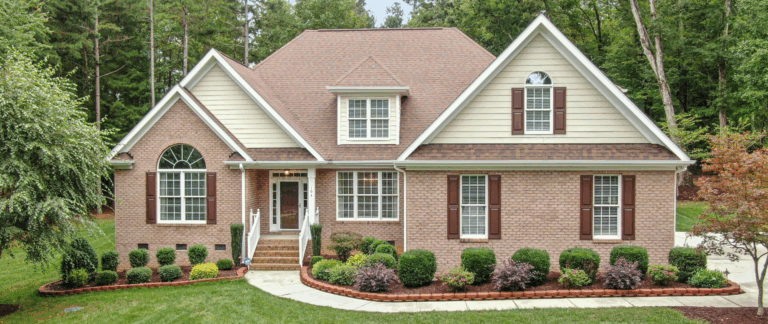
Tennessee gives real estate investors a rare combination of advantages: no state income tax on rental income, a 25% residential assessment ratio that keeps property taxes below the national average, and a 2018 state law that protects short-term rental operations from outright local bans. Meanwhile, the tourism economy continues driving revenue through the Smoky Mountains corridor, while Nashville, Memphis, Knoxville, and Chattanooga absorb steady inbound migration.
For investors building rental portfolios across the state, DSCR loans through Loankea remove one of the biggest obstacles in traditional financing. No tax returns required. No employment verification. No personal debt-to-income calculation. The property’s cash flow does the qualifying work.
What a DSCR Loan Actually Does
DSCR stands for debt service coverage ratio. The loan evaluates the rental income generated by the property against the monthly mortgage payment. If the rent covers the payment, the property qualifies. Personal income documentation stays out of the equation.
The formula is straightforward:
DSCR = Monthly Gross Rental Income ÷ Monthly PITIA
PITIA includes principal, interest, taxes, insurance, and HOA dues. A ratio of 1.0 means the property breaks even. A ratio of 1.20 means the rent covers the payment with 20% remaining each month. A ratio below 1.0 means the property operates at a deficit unless rents increase or the loan balance is reduced.
How Loankea Calculates Rental Income on Tennessee Properties
The income calculation depends on the property’s current use.
- Occupied long-term rentals qualify using the active signed lease. We use the contract rent stated in the agreement.
- Vacant long-term rentals qualify using the appraiser’s Form 1007 market rent schedule for single-family properties or Form 1025 for two- to four-unit properties.
- Short-term rentals with operating history qualify using 12 to 24 months of platform statements from Airbnb or Vrbo.
Loankea also accepts AirDNA reports as supporting documentation. Most programs apply a 20% to 25% reduction to trailing gross revenue before calculating DSCR to account for seasonal fluctuations. A Gatlinburg cabin generating $95,000 over 12 months would typically qualify using approximately $72,000 to $76,000 after the standard adjustment.
Who Qualifies and What You Need to Apply
Tennessee DSCR loans require far less documentation than conventional mortgages. The requirements typically fall into three categories.
Personal Documentation
- Government-issued photo ID or passport
- Two months of bank statements showing reserves and down payment funds
- Signed credit authorization
- Proof of liquid assets for closing
Property Documentation
- Purchase contract for acquisitions or current mortgage statement for refinances
- Property insurance quote
- Signed lease if the property is tenant-occupied
- 12 to 24 months of Airbnb or Vrbo statements plus an AirDNA report for short-term rental scenarios
Entity Documentation (if not closing personally)
- Articles of organization or incorporation
- Operating agreement or corporate bylaws
- IRS EIN confirmation letter
- Certificate of Authority registered with the Tennessee Secretary of State for out-of-state LLCs
That is generally the complete documentation package. No W-2s, no 1099s, no tax returns, no employer verification calls, and no profit-and-loss statements.
Loankea DSCR Terms Available in Tennessee
Pricing on Tennessee DSCR loans starts around 6.0% for the strongest borrower profiles in mid-2026 and reaches approximately 7.5% for more challenging scenarios. Rates vary based on credit score, DSCR, loan-to-value ratio, and loan structure.
| Program Element | Standard Tier | Premium Tier |
|---|---|---|
| Minimum credit score | 620 | 700+ |
| Maximum LTV on purchase | 75% | 80% |
| Maximum LTV on cash-out | 70% | 75% |
| Minimum DSCR | 0 (No-Ratio available) | 1.25+ |
| Reserve requirement | 6 months PITIA | 3 months PITIA |
| Loan size | $100,000 to $3M | Up to $3M |
| Typical closing timeline | 21–30 days | 14–21 days |
Loankea offers 30-year fixed loans, 40-year fixed loans with a 10-year interest-only period, and 5/6 or 7/6 ARM options in Tennessee. Foreign nationals may qualify through a dedicated program that does not require U.S. credit history or U.S. tax filings.
Entity Vesting Options
Tennessee DSCR loans may close in an LLC, S corporation, C corporation, or revocable trust. Many investors structure ownership through Wyoming or Delaware holding companies with separate Tennessee LLCs for each property to improve asset separation while controlling operating costs.
Foreign LLCs are permitted as long as the entity registers a Certificate of Authority with the Tennessee Secretary of State before closing.
Conventional Fannie Mae financing limits investors to 10 financed properties. Loankea DSCR programs do not impose a portfolio cap because each property qualifies independently based on its own cash flow.
How Tennessee’s 25% Assessment Ratio Impacts Investors
Tennessee uses one of the most investor-friendly property tax structures in the country. Residential real estate is assessed at 25% of appraised value, after which local tax rates are applied per $100 of assessed value. The result is typically lower property taxes than in many other Southeastern states.
For example, a $300,000 single-family rental in Knox County with a combined tax rate of approximately $2.46 per $100 of assessed value produces roughly $1,845 in annual property taxes. The same property in Williamson County (Brentwood, Franklin) runs higher because of stronger schools and infrastructure spending. The same property in Cumberland County (Crossville) runs lower because of a smaller local budget.
Effective Tax Rates Across Major Tennessee Counties
| County | Major Cities | Effective Tax Rate | Notes |
|---|---|---|---|
| Shelby | Memphis, Germantown, Bartlett | 1.03% | Highest in the state |
| Davidson | Nashville | 0.66% | Reappraisal completed in 2025 |
| Williamson | Franklin, Brentwood | 0.56% | Premium suburban market |
| Knox | Knoxville, Farragut | 0.60% | Stable underwriting environment |
| Hamilton | Chattanooga | 0.75% | Strong rent growth |
| Sevier | Gatlinburg, Pigeon Forge | 0.48% | Tourism-driven market |
| Rutherford | Murfreesboro | 0.62% | Strong workforce demand |
| Montgomery | Clarksville | 0.74% | Fort Campbell-driven demand |
| Madison | Jackson | 0.84% | Lower-cost entry market |
| Cumberland | Crossville | 0.31% | Lowest effective rate among major counties |
Tennessee counties operate on a 4 to 6 year reappraisal cycle. When a reappraisal year hits, state law requires the assessor to certify a recalculated tax rate that produces the same total revenue as the prior year. Local commissions can vote to exceed the certified rate, but the public hearing process surfaces those decisions early. Before underwriting a Tennessee rental, pull the latest tax bill directly from the county trustee’s website rather than relying on listing data.
Why Decatur Rentals Behave Differently
Most Tennessee residential property uses the 25% assessment ratio. Commercial property uses 40%. A two-to-four unit residential rental held in an LLC still qualifies for the 25%residential ratio in most counties, as long as it remains classified residential by the assessor. Five-plus unit apartment buildings shift to commercial classification. Verify the classification on a small multifamily deal before modeling.
The Tennessee Short-Term Rental Unit Act Explained
Tennessee passed the Short-Term Rental Unit Act in 2018. The law protects short-term rental operations from outright local bans while still allowing municipalities to regulate permitting, zoning, inspections, and operations. The protections matter because they remove a significant downside risk that exists in California, New York, and other heavily regulated states.
Important points for investors include:
- Local governments cannot ban short-term rentals. A municipality can regulate STRs through permits, inspections, and zoning rules, but it cannot prohibit them as a category. The law has held up in multiple municipal disputes.
- Grandfathered properties carry forward. Any property operating as an STR before a new local ordinance took effect retains the right to operate under the rules in place at the time of registration. The grandfather clause survives ownership transfer in most cases.
- The three-strikes provision under § 13-7-604. A property that accumulates three documented violations of generally applicable local laws (noise, occupancy, trash, parking) loses its right to operate as a short-term rental permanently. This is not a fine. The right itself disappears.
- Public Chapter 364, effective July 1, 2025. The first 30 days of any reservation, regardless of total stay length, are subject to local occupancy tax. This closed a workaround where extended stays avoided lodging taxes by crossing the 30-day line.
For DSCR underwriting, compliance matters as much as cash flow. Loankea finances investor-grade STRs in markets where the local permit program allows non-owner-occupied operations. We confirm the property’s STR-permitted status as part of the appraisal review.
Insurance Costs by Region and Why They Matter
Insurance carries more weight in Tennessee DSCR underwriting than most investors expect. Annual premium increases ran 8 to 15 percent year-over-year from 2023 through 2025, driven by severe weather events across the Mid-South and rising replacement costs. A property quoted at $1,800 per year two years ago may quote at $2,400 today.
Tennessee Regional Insurance Ranges (Single-Family Rental, 2026)
Urban Nashville and Memphis
Annual premiums on a typical single-family rental run $1,400 to $2,400, or about $115 to $200 per month. PITIA stays predictable in established neighborhoods.
Smoky Mountains corridor
Properties in Gatlinburg, Pigeon Forge, and Sevierville often range from $2,200 to $4,500 annually (or roughly $185 to $375 per month) due to wildfire exposure and higher replacement costs. STR liability riders may add another $400 to $900 annually.
Chattanooga, Knoxville, Tri-Cities, Clarksville
Annual premiums run $1,500 to $2,800, generally tracking the urban average with modest adjustments for property age and condition.
West Tennessee outside Memphis (Jackson, Dyersburg, Union City)
Tornado exposure pushes premiums modestly higher than the inland Tennessee average. Expect $1,700 to $3,200 annually on a standard single-family rental.
Properties in FEMA flood zones
Flood policies through the National Flood Insurance Program or private equivalents add $700 to $2,400 annually depending on zone designation and elevation. Always check the flood determination before going under contract.
The takeaway lands the same way every time. Always model DSCR with a property-specific insurance quote tied to the actual address. A $200 monthly difference in premium can move a deal from 1.10 DSCR to 0.94 DSCR.
8 Ways to Improve Your DSCR Before Applying
A higher coverage ratio means better pricing, higher leverage, and broader program access. These adjustments produce measurable movement.
1. Increase the Down Payment by 5%
A 5% bump on a $350,000 Murfreesboro purchase reduces the financed amount by $17,500. At 7% on a 30-year fixed, that lowers monthly P&I by roughly $116. A deal sitting at 0.96 DSCR usually clears 1.05 with that single change.
2. Use the 40-Year Interest-Only Structure
The 40-year term with a 10-year interest-only window removes principal from the qualifying payment for the first decade. On a $400,000 loan at 7 percent, fully amortizing P&I runs about $2,661. Interest-only at the same rate runs $2,333. The $328 monthly delta flows straight into the ratio.
3. Obtain an Accurate Insurance Quote
Estimate-based modeling produces underwriting surprises more often in Tennessee than borrowers expect, especially in the Smokies corridor and West Tennessee. Pull an actual bindable quote on the exact property address before locking the deal.
4. Document Every Income Source
Detached garage rent, storage fees, pet rent, and STR cleaning fees collected separately from nightly rate count toward gross income on most Loankea programs when properly documented through rent rolls or platform statements. A $45 monthly pet rent on a Knoxville duplex adds $540 annually to qualifying income.
5. Support the Appraiser with Strong Comparables
The Form 1007 rent estimate on a vacant property anchors the qualifying calculation. Provide the appraiser with three to five active lease comparables from the same submarket, signed leases from the past 90 days if you can get them, and management company rent rolls. Appraisers respond to evidence.
6. Verify Current Property Taxes
Tennessee’s reappraisal cycle creates real swings in the tax line. A property that just reappraised upward in Hamilton County or Davidson County can carry a noticeably higher PITIA than the prior owner experienced. Pull the current bill from the trustee’s website before modeling.
7. Time the Lease Signing Strategically
If the property is vacant and you have time before closing, signing a lease at market rent before the appraisal lets the lender use the lease income rather than the Form 1007 estimate. Lease income typically underwrites at 100 percent of the contract amount, while market rent on vacant property may be discounted.
8. Consider the No-Ratio Program for Below-Threshold Deals
Loankea offers a DSCR no-ratio program for properties that do not break even on traditional underwriting. The trade-off is lower LTV (typically 70% maximum) and higher pricing, but it keeps the deal alive when conventional DSCR fails. Useful for value-add acquisitions where post-renovation rent will lift the ratio later.
Common Reasons Tennessee DSCR Deals Fail
- Using Nashville insurance assumptions for Memphis properties
- Attempting to launch new STRs in restricted Pigeon Forge zones
- Assuming Nashville Type 2 STR eligibility without zoning verification
- Ignoring prior STR violations tied to the property
- Failing to account for updated occupancy tax rules
- Missing Tennessee Certificate of Authority requirements for out-of-state LLCs
- Incorrectly applying commercial tax assessment ratios to residential multifamily properties
Scaling a Tennessee Portfolio With DSCR Loans
No Property Limit Through Loankea
Conventional financing under Fannie Mae rules stops at 10 financed properties total. Loankea DSCR programs apply no ceiling. Each loan qualifies on its own subject-property cash flow without aggregating across the portfolio. Investors running 15, 25, or 40 properties across Tennessee carry no underwriting wall on volume.
The BRRRR Strategy Opportunities
The Buy, Rehab, Rent, Refinance, Repeat workflow fits Tennessee well because value-add inventory exists in nearly every metro. Investors acquire underperforming properties using bridge or hard-money financing in markets like Frayser and Whitehaven in Memphis, North Nashville and Madison, East Knoxville, and parts of Chattanooga’s Highland Park. After renovation and stabilization with new tenants, the property refinances into a 30-year DSCR mortgage at up to 75% LTV cash-out. The extracted equity funds the next acquisition.
Active BRRRR submarkets in Tennessee for 2026 include:
- South Memphis and Hickory Hill (lower entry prices, stable rents)
- Antioch, Madison, and parts of East Nashville (transitional but appreciating)
- North Knoxville and the Inskip-Norwood corridor
- Highland Park, East Lake, and East Ridge in greater Chattanooga
- Clarksville’s Sango and Tiny Town areas (Fort Campbell-driven demand)
Pairing DSCR With 1031 Exchanges
DSCR financing fits cleanly inside the 1031 like-kind exchange windows. Investors selling appreciated property in California, Florida, or New York identify Tennessee replacement property within 45 days and close within 180 days under IRS Section 1031. Loankea’s typical 14 to 21 business day DSCR closing leaves room inside both deadlines.
The BlueOval City Effect on West Tennessee
Ford’s BlueOval City electric vehicle and battery plant near Stanton in Haywood County is expected to begin full production in 2026. Estimates put direct employment at roughly 6,000 jobs, with thousands more through supplier networks across Haywood, Tipton, Madison, and Shelby counties. Investors targeting workforce housing in Jackson, Brownsville, Covington, and surrounding communities are positioning ahead of the demand wave. DSCR loans on properties in these markets underwrite cleanly because the rent fundamentals improve as employment rises.
Why Investors Choose Loankea
Loankea’s DSCR loan programs are designed specifically for real estate investors who need adaptable financing options. We customize our options to match your investment goals and deliver clear solutions for your property financing needs.
| Borrower Features | Property & Loan Features |
|---|---|
| Credit scores starting at 620 | Loan amounts from $100,000 to $3 million |
| No income verification | Cash-out up to $1 million |
| No tax returns or W-2s | 30-year and 40-year fixed options |
| LLC and trust vesting | ARM and interest-only structures |
| Foreign national eligibility | Mixed-use and multifamily financing |
| No limit on financed properties | STR and cabin financing available |
| DSCR ratios as low as 0 | Up to 80% CLTV for strong STR scenarios |
These features make Loankea a strong option for investors seeking flexible DSCR financing with streamlined documentation and faster closings.
How to Get a DSCR Loan With Loankea
The process takes 14 to 21 business days from application to closing on a typical file.
- Submit your application through the Loankea website or schedule a direct call with a loan officer.
- Receive a property-specific DSCR analysis using actual insurance quotes and the current county tax rate.
- Lock the rate once you sign the loan estimate.
- Order the appraisal with rent schedule (Form 1007 for single-family, Form 1025 for two-to-four unit).
- Provide the documents listed above and any STR permit verification if applicable.
- Close in your chosen entity through a Tennessee-licensed closing attorney or title company.
A Loankea loan officer can run your specific scenario, return a DSCR analysis tied to the actual property address, and give you accurate numbers in one call.