The short-term rental (STR) market has matured. Guests now expect newer finishes, larger footprints and amenity-rich stays, and the hosts delivering those experiences are the ones winning bookings, reviews, and premium nightly rates. For investors, that shift creates a clear opportunity: the best deals are no longer move-in-ready listings at retail prices. They’re distressed properties and underperforming rentals that can be transformed with the right financing partner.
That’s where renovation financing changes the game. Unlike conventional or DSCR loans, renovation loans are built specifically for investors who want to buy with less, build more, and recapitalize through a cash-out refinance once the property is stabilized. Below, we break down the two primary ways savvy STR operators are using renovation financing today with real examples of how the numbers work.
Why Traditional Financing Falls Short for STR Investors
Conventional and DSCR lenders underwrite to the property as it is today. That means they won’t touch distressed homes, they cap leverage on value-add deals, and they rarely allow structural changes, ADU additions, or permitted conversions. For an STR investor whose edge is creating value — not just buying it — these limits leave a lot of money on the table.
Renovation financing is designed differently. It’s closer to hard-money in speed and flexibility, but structured to bridge directly into long-term takeout debt once the project is complete. The result: investors can pursue deals that would otherwise be impossible, and recycle their capital far faster.
Strategy 1: Purchase Renovation Loans
A purchase renovation loan lets you acquire a distressed “diamond” property and turn it into a turnkey, desirable STR with as little as 10% down. On top of that, the lender finances 100% of the construction budget. And here’s the detail most investors miss: that budget isn’t just hard construction costs. You can fund via construction budget fixtures, furniture, design fees, staging, photography, and the full suite of prep work needed to launch an Airbnb-ready property — provided it’s properly scoped and documented upfront.
Why It Beats Traditional Financing
- Can buy properties that conventional or DSCR lenders won’t touch
- Full renovation funding and more rolled into a single loan
- Lower down payment of 10% (versus 20–25%+ on traditional loans)
- No DSCR or conventional debt-service limits
- Hard-money-like speed and flexibility
- No prepayment penalties
- Interest-only payments during the renovation period
- After renovation, you can execute a cash-out refinance on the new appraised value and pull your full down payment back out, leaving you with effectively $0 out of pocket in your STR
That last point is critical and deserves to be at the center of any serious STR strategy. The ability to recycle capital is what separates investors who scale from investors who stall.
The Trade-Offs
- Short-term financing (typically 12–24 months)
- Higher interest rates than conventional loans
- Higher origination and lender fees
Example: Rich’s Sonoma County Purchase
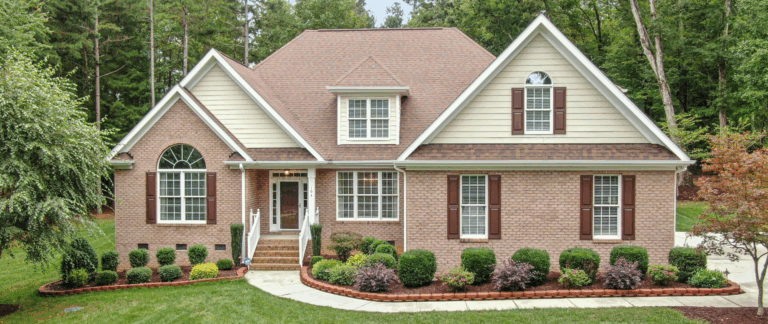
Rich found a 4-bed, 3-bath single-family home in Sonoma County in distressed condition. The lot was strong and the area was highly desirable — a textbook value-add opportunity. Comparable per-square-foot pricing suggested a retail value of around $1,250,000, and renovated comps were pushing $1,450,000. The distressed purchase price was $850,000.
Rich put down just 10% and the lender financed a $200,000 construction budget covering the full renovation plus STR preparation. At the end of the project, his remaining loan balance was $945,000. He went back to his lender for a DSCR takeout loan, and the property appraised at $1,425,000. At 75% LTV on the new value, he refinanced into long-term debt and pulled his full down payment back out, ending with 0% of his own capital in the deal.
Over the next 12 months, the property generated ~$149,000 in gross cash flow, comfortably covering the mortgage and producing an effectively infinite return on his (now zero) equity.
Strategy 2: Refinance Renovation Loans
The second strategy is designed for investors who already own an STR with meaningful equity and see a path to significantly higher performance through expansion or repositioning. Think: adding bedrooms, building an ADU, expanding living space, adding a pool or covered outdoor area, or even pursuing a lot subdivision. Refinance renovation loans can fund all of it while paying off the existing mortgage in one move.
Why It Beats Traditional Refinancing
- Can fund conversions or structural changes that traditional lenders won’t touch, including permitted additions without violating typical mortgage restrictions
- Funds full structural renovations with sizable construction budget that can be more than current property value
- Uses existing equity to pay off the prior loan in the same transaction
- No DSCR or conventional limits
- Hard-money-like flexibility
- No prepayment penalties
- Interest-only payments during construction
- Cash-out refinance at the end lets you pull appreciated after-repair value back out — again leaving you with $0 out of pocket in your STR
The Trade-Offs
- Short-term financing (12–24 months)
- Higher interest rates
- Higher fees
- May require meaningful existing equity in the property
The best outcomes come from working with a lender who understands all of these products together, where renovation financing becomes a game-changing tool to buy with less and do much more, beyond traditional DSCR or hybrid thinking.
Example: Carl’s National Park STR Repositioning
Carl had owned a 3-bed, 2-bath, 1,500 sq ft STR in a national park area for five years. The property was valued at $600,000 and was generating $70,000 per year in gross revenue. He carried a $300,000 balance at 6% and held $300,000 in equity.
The property had appreciated well, but performance was slipping. Reviews were declining as the home aged, and newer competitors with renovated, larger homes were capturing more bookings. A nearby recently renovated 2,500 sq ft home had just sold for $1,100,000 — a clear signal that the market was rewarding upgraded inventory.
Carl brought in a contractor and designer. Together they scoped a plan to expand the home by 700 sq ft into a 5-bed, 3.5-bath property. The projected budget and timeline would have cost him nearly three full years of current property performance if funded out of own savings.
Instead, Carl found a lender that offered construction financing structured as a credit line of $630,000 with a $430,000 initial advance and $200,000 available for draw reimbursements as construction progressed. The structure:
- Paid off his existing mortgage
- Funded the $200,000 renovation
- Added ~$130,000 in cash-out proceeds to cover updated furniture, inventory, payment reserves, and project contingency
- Charged interest only on amount used like a credit line
The project was completed in 7.5 months. The renovated 2,200 sq ft, 5/3 home appraised at $1,050,000, and Carl refinanced into a DSCR loan at 5.75%. Seven months into the project, he already held $420,000 in equity — up from $300,000 a year earlier — and his new listing was booking at dramatically higher ADRs. Projected revenue over the next 12 months became $120,000, nearly double his previous run rate.
The Bottom Line
Renovation financing isn’t a niche product — it’s increasingly the defining tool for serious STR investors in a market where guests reward newer, larger, better-designed properties. Whether you’re buying a distressed home you can reposition, or unlocking equity in an existing rental to keep pace with the competition, the combination of low down payment + full construction funding + cash-out refinance takeout is what makes $0-out-of-pocket STR strategies possible.
The real edge comes from working with a lender who can structure the full lifecycle — acquisition, construction, and long-term takeout — under one roof. That’s where renovation financing stops being a loan product and starts being a scaling engine for your portfolio.