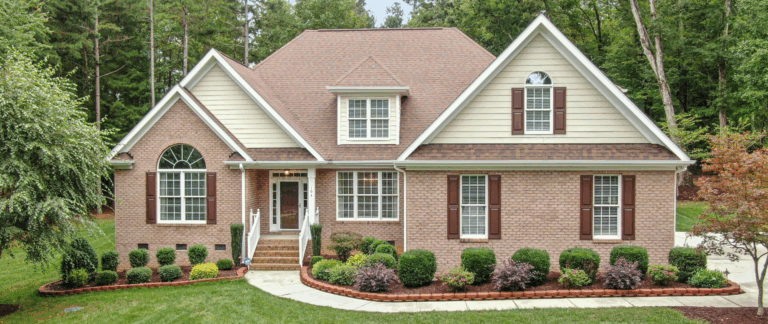

A growing number of short-term rental investors fall into a financing gap. Their properties generate strong cash flow, yet conventional lenders reject them because W-2 income is insufficient, while pure DSCR lenders disqualify them because they occupy part of the property. Hybrid STR mortgage loans were built to close exactly that gap.
Quick Summary
- What it is:
A dual-underwrite mortgage combining conventional DTI qualification with DSCR-style rental income evaluation - Down payment:
As low as 15%, with LTV up to 85–90% depending on borrower profile - Income sources accepted:
Personal income plus verified Airbnb, VRBO, or AirDNA rental data - Best for:
Live-rent investors, self-employed borrowers, ADU owners, and seasonal vacation rental buyers - Loan structure:
Fixed-rate or hybrid ARM (5/6, 7/6, or 10/6); LLC ownership eligible - Credit score:
Minimum 680; more favorable terms typically available at 720+
Core Concepts Every Investor Should Understand
Before examining the hybrid structure itself, it helps to have a clear foundation in the terminology and mechanics that underpin short-term rental financing. The following concepts appear throughout this guide and in any serious conversation with a lender.
Short-Term Rental
A property rented on a nightly or weekly basis through platforms such as Airbnb, VRBO, or direct booking. STRs typically generate 1.5 to 3 times the monthly income of an equivalent long-term lease, but that income is variable and seasonal.
DSCR
The ratio of a property’s gross rental income to its total annual debt obligations (principal, interest, taxes, and insurance). A DSCR of 1.0 means the property breaks even. Most lenders require 1.0 to 1.25 or higher for approval.
DTI (Debt-to-Income Ratio)
The percentage of a borrower’s gross monthly income that goes toward debt payments. Traditional lenders typically cap DTI at 43–45%. The hybrid model uses DTI for the conventional portion of the loan, evaluated alongside the DSCR overlay.
Non-QM Loan
A Non-Qualified Mortgage does not conform to the ability-to-repay standards set by Fannie Mae and Freddie Mac. DSCR loans and hybrid STR loans are Non-QM products. They offer more flexibility but typically carry slightly higher rates than agency-backed loans.
LTV (Loan-to-Value Ratio)
The loan amount expressed as a percentage of the property’s appraised value. A 15% down payment results in an 85% LTV. Higher LTV means less cash required at closing, but often comes with higher rates or additional requirements.
Dual Underwriting
The defining feature of a hybrid STR loan. The lender simultaneously evaluates the borrower’s personal financial profile (income, credit, DTI) and the property’s rental performance (DSCR). Both assessments contribute to the final approval decision.
Why Hybrid STR Loans Are Emerging Now
The short-term rental market has reached a level of maturity that simply did not exist five years ago. Platforms like Airbnb and VRBO now provide years of verified, property-specific performance data including occupancy rates, average daily rates, and seasonal revenue patterns. This data infrastructure has made it possible, for the first time, for lenders to underwrite based on STR income with genuine confidence.
At the same time, the investor population has changed. A significant share of today’s STR operators are not absentee portfolio builders. They are homeowners who live in part of a duplex and rent the other unit, owners of vacation homes that sit unoccupied for several months each year, or investors who converted an accessory dwelling unit (ADU) into a listing. Traditional loan structures were never designed for this “live-rent” model.
US short-term rental demand is projected to grow 6.8% in 2025, with revenue per available rental (RevPAR) forecasted to rise by 2.9%. As the sector matures, lenders are developing products that reflect how STR investors actually operate rather than forcing them into frameworks designed for long-term landlords.
How a Hybrid STR Mortgage Loan Works
The hybrid structure splits the loan into two conceptual layers, each underwritten according to different criteria, then combined into a single product. Understanding each layer separately makes the overall mechanics easier to follow.
Layer 1: The Conventional (Personal Income) Portion
This layer typically covers 60 to 80 percent of the property’s value and is evaluated the same way a standard mortgage would be. The lender reviews the borrower’s credit score (generally 680 or higher), debt-to-income ratio (below 43 percent), employment history, and verified personal income. This layer provides the stable, fixed-rate foundation of the loan and qualifies for more favorable pricing because of its conventional-style underwriting.
Layer 2: The DSCR Overlay (Rental Income) Portion
This layer covers the remaining 20 to 30 percent of the property’s value and is evaluated on the strength of the property’s short-term rental cash flow. Lenders use verified income data from Airbnb host dashboards, VRBO statements, or third-party analytics tools such as AirDNA to project annual rental revenue. A DSCR of 1.0 or higher is required for this layer, meaning the rental income is expected to at minimum cover the associated debt obligations.
DSCR = Annual Rental Income ÷ Annual Debt Service (PITI)
The Blended Result
Together, the two layers produce a single qualification assessment that accounts for both who the borrower is and how the property performs. This blended model allows investors to secure higher leverage (up to 85 to 90 percent LTV) than a pure DSCR loan typically permits, while retaining residential mortgage terms and flexibility that commercial underwriting would not offer.
- Ignores STR rental income entirely
- Requires W-2 or full-doc income only
- Restricts rental days per year
- No occupancy flexibility for live-rent models
- Caps at 10 financed properties
- Counts both personal and STR income
- Accepts Airbnb, VRBO, and AirDNA data
- Allows partial owner occupancy
- Eligible for LLC title ownership
- No portfolio property cap
Qualification Requirements
Hybrid STR loans carry more specific requirements than standard investment property loans precisely because they evaluate two separate sets of criteria simultaneously. The following figures represent typical market standards; individual lenders may apply different thresholds.
| Requirement | Typical Threshold | Notes |
|---|---|---|
| Credit Score | 680 minimum | Better pricing at 720+; some lenders require 700 as the floor |
| DTI Ratio | Below 43% | Applies to the conventional layer; rental income can offset DTI calculation |
| DSCR | 1.0 or higher | Some lenders accept below 1.0 if overall borrower profile is strong; no-ratio options exist |
| Down Payment | 15–20% | Higher down payment can compensate for a lower DSCR or credit score |
| Cash Reserves | 3–6 months PITI | Held in liquid accounts; documents must show 60–90 day seasoning |
| Income Documentation | Personal + STR statements | Airbnb/VRBO host dashboards, bank statements, or AirDNA projections accepted |
| Property Types | SFR, 2–4 units, condos | Property must be in an STR-permissible zone; HOA rules must allow short-term rental |
| Occupancy Type | Partial owner-occupancy acceptable | Borrower may live in one unit while renting another; full non-occupancy also eligible |
Lenders evaluate STR income through multiple channels. Properties with an operating history of 12 months or more will typically be underwritten using actual platform statements. New acquisitions or properties without a rental history are underwritten using projected income from AirDNA or comparable market analysis, which estimates occupancy rates and average daily rates based on comparable active listings in the same market.
Investors purchasing in states with active STR regulations — including parts of Florida, California, and New York — should verify local ordinances before applying. Lenders will often require documentation confirming that short-term rental operations are permitted at the specific address.
Who Benefits Most from a Hybrid STR Loan
The hybrid model addresses a specific and growing subset of investors. It is not a universal replacement for conventional or DSCR financing; it is a specialized product that solves a distinct problem.
Live-Rent Investors and ADU Owners
Borrowers who occupy one unit of a duplex, a basement suite, or an accessory dwelling unit while renting the other on Airbnb face a structural problem. Conventional lenders disallow STR income on owner-occupied properties. DSCR lenders prohibit on-site occupancy. The hybrid model was specifically designed for this configuration, allowing both income streams to count toward qualification.
Self-Employed Borrowers with Variable Income
Entrepreneurs, consultants, and freelancers often show reduced taxable income after business deductions, making W-2-style qualification difficult even when cash flow is genuinely strong. The hybrid structure accommodates this by evaluating business deposits and rental performance alongside personal financials, producing a more accurate picture of the borrower’s actual financial position.
Seasonal Market Buyers in High-Demand States
Investors purchasing in markets like Florida, Arizona, California, or mountain resort areas in Colorado and Utah deal with income that fluctuates significantly by season. Because hybrid underwriting uses annualized income and occupancy-adjusted projections rather than a static monthly snapshot, seasonal variation is handled more accurately than under conventional lender standards.
Vacation Home Owners Seeking to Monetize Partial Periods
A borrower who occupies a property for four months of the year and lists it on VRBO for the remaining eight months does not fit neatly into any standard mortgage category. Hybrid STR financing accommodates this dual-use model, allowing the rental income from the non-occupied period to strengthen the qualification profile.
Hybrid STR Loans vs. Other Loan Types
The table below compares hybrid STR loans against the four most common alternatives available to short-term rental investors in 2026.
| Feature | Conventional Loan | DSCR Loan | Hard Money Loan | Hybrid STR Loan |
|---|---|---|---|---|
| Income Basis | Personal (W-2 / tax return) | Property rental income only | Asset value / exit strategy | Personal + STR rental income |
| Minimum Down Payment | 15–25% | 20–25% | 20–35% | 15% |
| Max LTV | 85% | 80% | 65–80% | 85–90% |
| Accepts STR Income | No | Yes | No | Yes |
| Owner Occupancy Allowed | Yes | No | Varies | Yes (partial) |
| LLC Title Eligible | No | Yes | Yes | Yes |
| Credit Score (Min.) | 620 | 660 | 600–640 | 680 |
| Typical Rate Range (2026) | 7.0–8.5% | 7.5–9.0% | 10–15% | 7.5–9.0% |
| Loan Term | 15 or 30 years | 30 years | 6 months – 3 years | Fixed or 5/6, 7/6, 10/6 ARM |
| Best For | W-2 employees, first rental | Portfolio builders, pure STR | Fix-and-flip, fast close | Live-rent, ADU, blended-use |
Risks and Considerations
Hybrid STR loans offer genuine advantages, but they also carry specific risks that investors should evaluate carefully before committing to this structure.
STR Income Volatility
Short-term rental revenue is sensitive to seasonal shifts, local events, and platform algorithm changes. If income drops significantly during an off-season or following a policy change, the DSCR ratio may fall below the lender’s threshold, affecting refinancing options.
Regulatory Risk
Many municipalities have introduced or are actively considering restrictions on short-term rentals. Purchasing in a market where regulations tighten after closing can materially reduce projected income and disrupt the qualifying assumptions the loan was built on.
Higher Rate on DSCR Layer
The DSCR overlay portion of the loan typically carries a rate 1 to 2 percentage points above the conventional layer. This blended rate is generally still competitive, but it is higher than a straight conventional loan on an equivalent property.
Prepayment Penalties
Like most Non-QM products, hybrid STR loans commonly include a prepayment penalty structure, often a 3-2-1 step-down over the first three years. Investors who anticipate refinancing within that window should factor penalty costs into their analysis before closing.
Dual Underwriting Complexity
Because two qualification frameworks run in parallel, hybrid loans require more documentation and a longer preparation period than a standard DSCR loan. Borrowers should plan for a more thorough review process and allow sufficient time before a target closing date.
HOA Restrictions
Condominium associations and planned communities increasingly prohibit short-term rentals. Lenders will verify HOA rules during underwriting. A property that cannot legally operate as an STR will not qualify under this loan structure regardless of projected income.
How to Apply for a Hybrid STR Loan