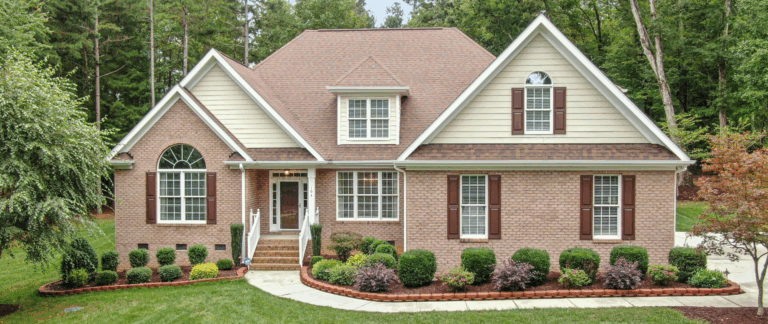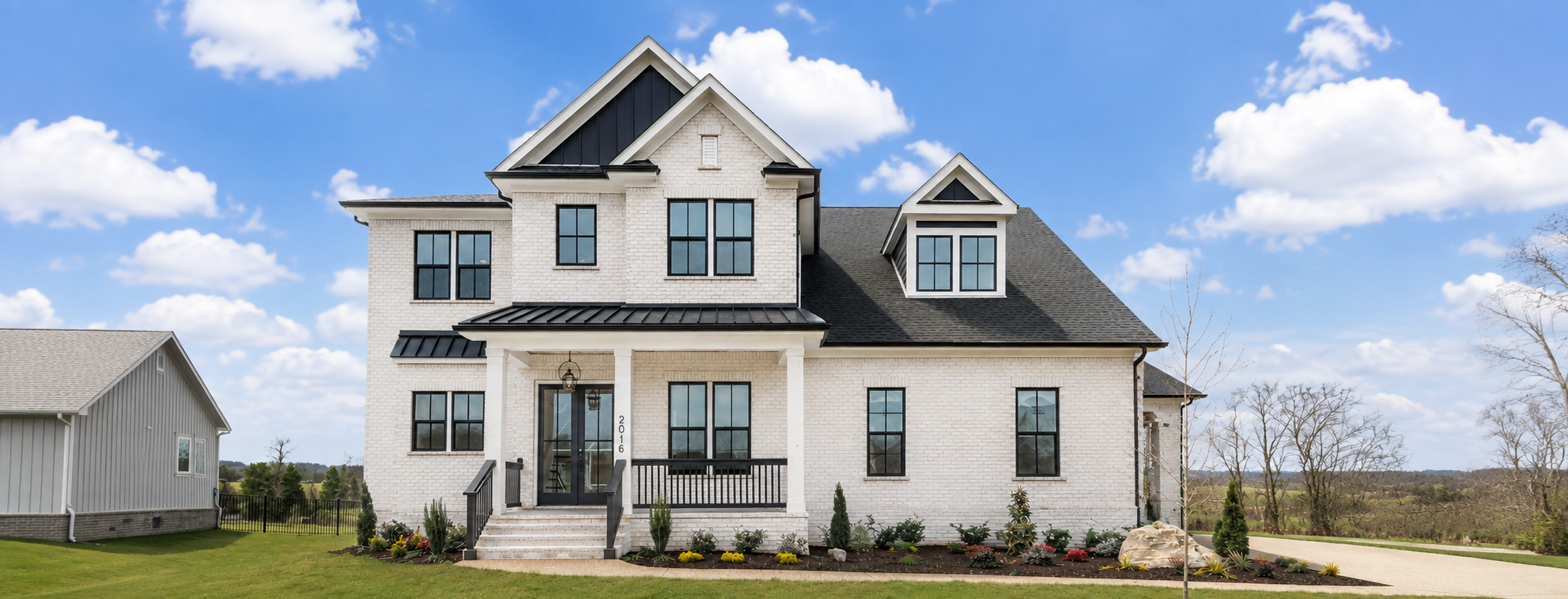


Many investors refinance into a DSCR loan and hold the property as a rental instead of forcing a sale, especially if market conditions have shifted since the loan closed.
A fix and flip loan is short term financing built for investors who purchase a property, renovate it, and resell it for a profit. Instead of waiting on a slow conventional mortgage, investors use this financing to move quickly, cover renovation costs as work progresses, and keep personal cash free for the next deal.
Tennessee’s flip market has cooled from its 2021 peak into something steadier. The statewide median sale price sits around $395,000, homes are taking roughly two months to sell on average, and inventory has climbed to a multi year high in several metros. Nashville, Memphis, Knoxville, and Chattanooga each move at their own pace, and a rehab strategy built for one rarely transfers cleanly to another. Loankea prices deals off the property and the plan, not a single statewide average.
Loankea funds acquisition and renovation in one loan for investors working anywhere in Tennessee, from Nashville and Memphis to Knoxville and Chattanooga.
Loan Terms Overview
| Program Feature | Detail |
|---|---|
| Interest rate | Starting at 8.45%, typically 8.45% to 11% |
| Loan to cost | Up to 92.5% of purchase and renovation costs |
| Loan to ARV | Up to 75% of after repair value |
| Loan amount | $75,000 to $5,000,000 |
| Rehab budget financed | Up to 100%, with fast draw turnaround |
| Term length | 6, 9, 12, 13, 19, or 24 months |
| Time to close | As fast as 7 to 10 business days |
| Credit score | Generally 620 minimum |
| Valuation | Exterior only in most cases |
| Prepayment penalty | None |
Loans close in an LLC, S corp, C corp, or individual name, and Loankea offers cash out refinance once a project is complete for investors who want to hold instead of sell.
Business Purpose Exemption
Tennessee’s mortgage licensing law, the Residential Lending, Brokerage and Servicing Act (Tenn. Code Ann. § 45-13-101 et seq.), governs residential mortgage loans, which the statute defines around loans made primarily for personal, family, or household purposes and secured by a dwelling the borrower occupies. A fix and flip loan on a non-owner-occupied investment property doesn’t fit that definition, so it generally falls outside the Act’s licensing requirement.
In practice, that means a Loankea fix and flip loan in Tennessee moves as a business purpose transaction rather than a consumer mortgage. There’s no mortgage loan originator license tied to the transaction itself and none of the consumer disclosure timelines that slow down owner occupied lending.
Keeping the deal in an LLC or other entity, and keeping the property non-owner-occupied, is what preserves that treatment. Mixing in personal occupancy pulls the loan back toward consumer lending rules. Working with a lender who understands this distinction keeps your fix and flip loan application from hitting unexpected delays.
Two Taxes at Closing
Tennessee charges two separate small taxes that touch a fix and flip deal, and both are easy to leave out of a budget if you’ve underwritten in a state that works differently.
The first is the mortgage recordation tax, sometimes called the indebtedness tax, charged when the deed of trust is recorded. The rate is $0.115 per $100 of the loan amount, with the first $2,000 exempt. On a $308,000 fix and flip loan, that comes to roughly $352, paid once at funding and again if the property is later refinanced into a new loan.
The second is the realty transfer tax, charged when the deed changes hands at $0.37 per $100 of the sale price. On a $430,000 resale, that’s about $1,591, customarily addressed at closing with responsibility negotiable between buyer and seller in the purchase contract.
Compared to states that charge a percentage of sale price as an excise tax with no ceiling in sight, Tennessee’s combined closing table tax bill is modest. It still belongs in the underwriting model rather than getting treated as a rounding error. Both of these costs sit outside the fix and flip loan itself, but they still belong in your total budget.
Permits Vary by City
Tennessee runs a three tier system for residential building codes, and which tier a property sits in changes the entire renovation timeline.
- Exempt cities and counties adopt and enforce their own codes through a local building department. Nashville, Memphis, Knoxville, and Chattanooga all fall here.
- Non-exempt areas rely on the State Fire Marshal’s office for enforcement instead of a local department.
- Opt-out areas, home to roughly a fifth of the state’s population, require no residential building permit at all for most construction.
Within the exempt cities, review times differ by scope. Nashville’s Metro Codes department typically reviews standard residential work in 10 to 45 days depending on project type. Chattanooga clears most residential permits over the counter, with plan checks running 1 to 2 weeks for standard projects and 3 to 4 weeks for additions or more complex scope. Memphis and Knoxville both publish similar ranges for comparable work.
None of this means a rural opt-out property is risk free. It means the permit line item disappears from the draw schedule entirely, which changes both the timeline and the holding cost model. Confirm the specific jurisdiction’s tier and current review time with the local building department before setting a listing date, since these timelines shift with staffing and volume. Realistic permit timelines are one of the most overlooked parts of budgeting a fix and flip loan correctly in Tennessee.
Where the Deals Are
Submarket selection does more work than state level averages in Tennessee. A few patterns worth underwriting around going into 2026:
- Nashville has cooled from its post pandemic run, with inventory up double digits year over year and more sellers offering concessions. That favors investors who can move fast on a well priced acquisition rather than compete on a bidding war.
- Memphis stays the most affordable major metro in the state, with steady 4% to 5% projected appreciation tied to logistics and manufacturing employment.
- Knoxville has posted some of the strongest price growth in Tennessee, supported by education, healthcare, and professional employment driving rental demand.
- Chattanooga offers lower entry prices and moderate, steady growth rather than a hot or cold market in either direction.
- West Tennessee, particularly Haywood, Tipton, Madison, and Shelby counties, is positioning ahead of Ford’s BlueOval City plant near Stanton, which is expected to reach full production in 2026 and bring thousands of direct and supplier jobs to the region.
Rising inventory statewide means comps matter more than they did two years ago. Set ARV from recent closed sales, not list prices, especially in metros where days on market has stretched out. Wherever you land, a fix and flip loan sized to local comps keeps the numbers honest.
Underwriting Checklist
- Pull a bindable insurance quote on the exact address before locking the budget. Rates vary sharply by region: roughly $1,400 to $2,400 a year in Nashville and Memphis, $2,200 to $4,500 in the Smoky Mountains corridor due to wildfire exposure, and $1,700 to $3,200 in tornado exposed West Tennessee counties. A generic statewide estimate can throw off the whole holding cost model.
- Confirm the property’s permit tier before setting a timeline. A renovation in an opt-out county moves faster than one inside Nashville or Memphis city limits.
- Underwrite ARV from closed comps, not list prices. With inventory rising and days on market lengthening in several metros, a flip priced off older comps can sit for months.
- Build both closing table taxes into the exit math. The recordation tax on the loan and the transfer tax on the sale are each small, but skipped in underwriting they show up as a surprise at closing.
- Line up the refinance exit before you need it. If the sale doesn’t clear at the target price, having a DSCR path already scoped avoids a forced, discounted sale.
Every one of these checks feeds directly into how a fix and flip loan gets priced and approved.
If the Sale Doesn't Clear
Not every project sells on the timeline planned at closing, and that’s manageable if the exit was scoped for it. Investors who can’t hit their target sale price often refinance into a DSCR loan instead, renting the property while waiting for better conditions. Loankea underwrites that path on the property’s rental income rather than personal income, and Tennessee DSCR loans typically close in 14 to 21 business days. The same property that funded renovation through a fix and flip loan can season directly into a 30 year or 40 year DSCR mortgage once it’s stabilized, including short term rental income in markets where local permitting allows it.
What We Offer
Loankea offers diverse fix & flip loan solutions crafted exclusively for property investors looking to venture into house flipping. Each lending option is customized to align with investors’ specific requirements. It helps investors achieve their monetary objectives with flexible terms and reliable support throughout the process. Whether this is your first fix and flip loan or your fiftieth, our team structures terms around the deal in front of you.
| Program Highlights | Additional Advantages |
|---|---|
| Up to 92.5% loan to cost | Up to 75% of after repair value |
| 100% of rehab budget with fast draws | Rates as low as 8.45% |
| Loans from $75,000 to $5,000,000 | Defer origination fees to exit |
| Closing in as little as 7 to 10 days | Interest only amortization |
| Term options of 6, 9, 12, 13, 19, or 24 months | Property types include 1 to 4 units |
| No prepayment penalty | Cash out refinance available on completed projects |
Try the Fix & Flip Calculator to run purchase price, rehab budget, and ARV against these terms before applying.