Wire Fraud Prevention: How to Protect Your Funds
Wire fraud is a scam designed to trick you into sending money to a fraudulent bank account. During a mortgage transaction, scammers may target your down payment, closing costs, or other funds by impersonating your lender, real estate agent, title company, attorney, or another trusted party.
These scams can happen through email, phone calls, text messages, or other forms of communication. Criminals may use stolen information from real estate transactions to make their messages appear legitimate.
How Wire Fraud Happens
A scammer may:
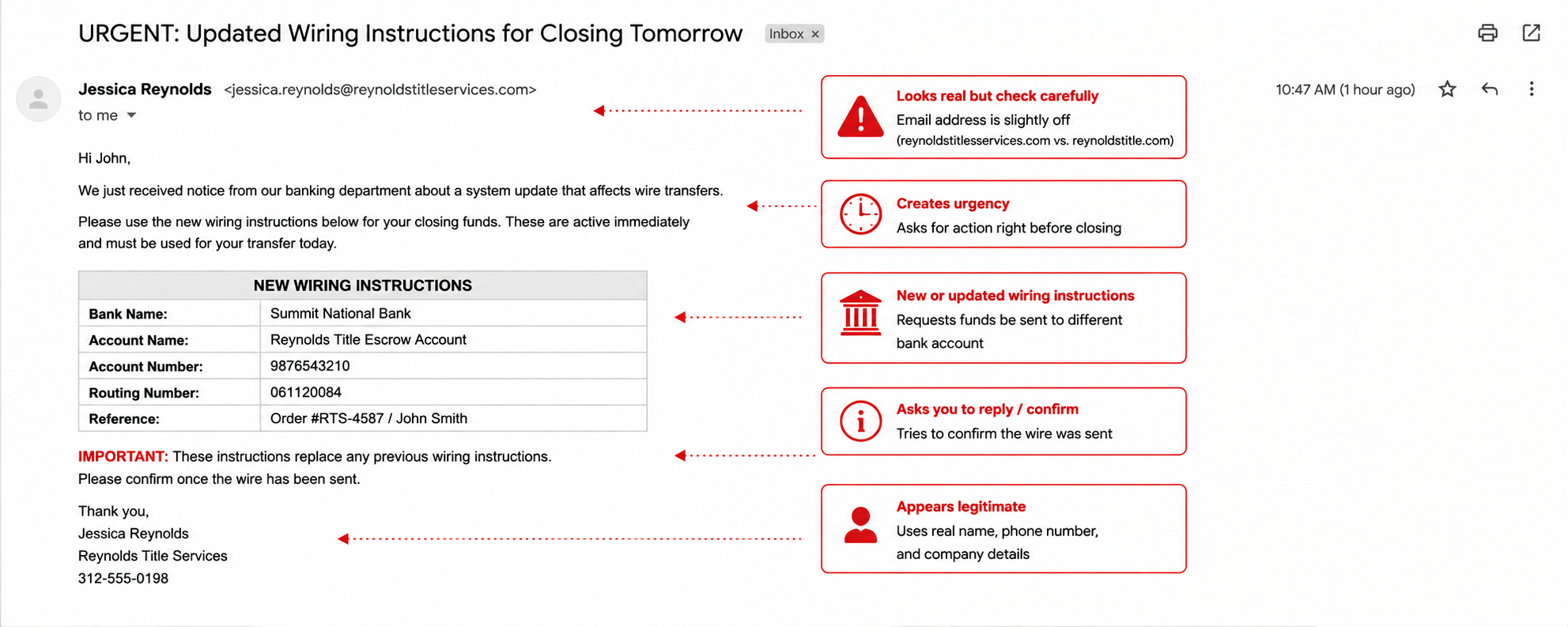
- Send an email that looks like it came from someone involved in your transaction.
- Provide new or “updated” wiring instructions shortly before closing.
- Ask you to send funds to a different bank account.
- Use a similar-looking email address or spoof a phone number.
- Request personal or financial information.
- Use stolen email accounts to monitor conversations and identify when a transaction is approaching closing.
- Use AI-generated emails, cloned voices, or deepfake video to make fraudulent communications appear more convincing.
What Loankea Will Never Do
Loankea will never ask you to send funds under these circumstances.
- We will never request that you wire funds to a new or different bank account without verbal confirmation.
- We will never ask you to send money via gift cards, cryptocurrency, or wire transfer apps.
- We will never pressure you to send funds immediately or skip your normal verification steps.
- We will never send updated wiring instructions by email without a follow up phone call from a number you already have on file.
- We will never ask for your online banking login, full account number, or one time passcodes over email or text.
- We will never ask you to open attachments or click links from unverified or unexpected senders.
If you receive a message claiming to be from Loankea that asks for any of the above, do not act on it. Contact your Loankea loan officer directly using the number on our website or your loan documents to confirm.
Best Practices to Protect Yourself
Before sending any funds:
- Never rely on wiring instructions received by email alone. Treat any change in payment instructions as suspicious.
- Independently verify the instructions. Call your trusted lender, title/settlement agent, or other closing professional using a phone number you already have—not a number provided in the suspicious message.
- Confirm the account details verbally. Verify the recipient name, bank, routing number, and account number before initiating the wire.
- Be especially cautious about last-minute changes. A request to change wiring instructions shortly before closing should always be independently confirmed.
- Do not click links or open unexpected attachments. If a message seems unusual, contact the sender through a trusted communication channel.
- Do not send sensitive financial information by regular email.
- Do not assume a phone call or video call is authentic. AI can be used to imitate a person’s voice, appearance, or communication style. If something seems unusual, verify it through another trusted channel.
- Take your time. Do not allow anyone to pressure you into sending funds immediately.
Remember
Your closing professionals should never make you feel pressured to bypass normal verification procedures. If you receive unexpected wiring instructions or notice a change in payment information, stop and verify it before sending money.
When in doubt, do not send the wire until you have independently confirmed the instructions.
If You Sent Money to a Fraudulent Account
Act immediately.
- Contact your bank or wire-transfer provider and request a wire recall or other available fraud response.
- Contact your lender and closing/settlement agent immediately.
- Preserve all emails, messages, phone numbers, wiring instructions, and other related information.
- Report the incident to the FBI’s Internet Crime Complaint Center (IC3) and the appropriate law-enforcement authorities.
The faster a fraudulent wire is reported, the better the chance that action can be taken to recover the funds.
Important: Always verify payment instructions independently before sending funds. If you are unsure whether a communication is legitimate, contact your mortgage or closing professional directly using trusted contact information.